5 Fall-Related Call Patterns Every Home Health Agency Should Be Monitoring
Five fall-related call patterns in home health that signal clinical risk and compliance exposure. What to listen for and how to act.
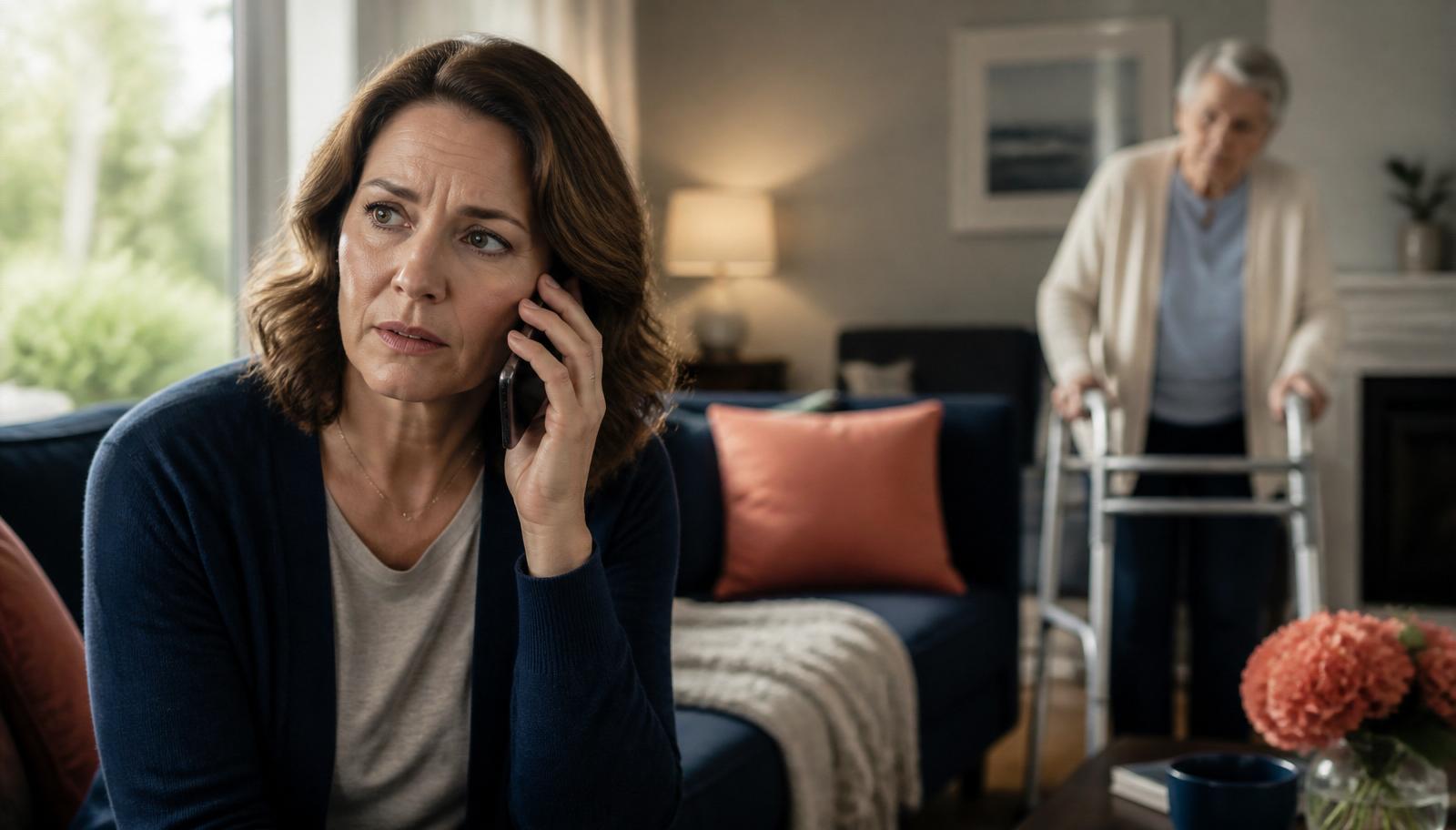
One in four adults over 65 falls each year. Fewer than half tell their doctor. In home health, the contact center is often the first point of disclosure — a patient or family member calls about a scheduling change and mentions a fall in passing. That information either gets captured or it does not.
Most agencies rely on agents to manually flag fall reports. They catch the obvious ones and miss the rest. The result is incomplete incident reporting, delayed clinical intervention, and preventable readmissions.
Five distinct fall-related call patterns carry different clinical, legal, and operational implications. Each one requires a different response.
1. First-Time Fall Reports
What it sounds like: "He tripped coming out of the bathroom last night." "She slipped on the kitchen floor — says she's fine but she's got a bruise." "Dad fell yesterday. He didn't want me to call, but I thought you should know."
Roughly 18% of fall disclosures occur during calls about unrelated topics — scheduling, refills, billing. The fall is an aside, not the reason for the call.
Why it matters: Medicare CoPs require agencies to document adverse events. A fall reported to a contact center agent that never reaches the clinical record is a documentation gap with direct survey exposure. A single fall also doubles the risk of a subsequent fall. The window for reassessing the home environment, reviewing fall-risk medications, and evaluating gait and balance is narrow.
Action trigger: Immediate clinical notification. Incident report. Fall risk reassessment within 48 hours. Care plan update.
2. Repeat Fall Mentions Across Multiple Calls
What it sounds like: "She fell again — third time this month." "I called about this two weeks ago. He's still falling." "Every time the aide leaves, he tries to get up on his own."
This pattern is invisible when calls are reviewed in isolation. Each looks like a standalone incident. Three falls in six weeks is a trajectory, not a coincidence.
Why it matters: Recurrent falls signal that the care plan is failing. They also create liability — if a patient sustains a serious injury and the agency's call records show prior falls without care plan adjustments, the exposure writes itself. CMS tracks fall rates under the Home Health Quality Reporting Program, and recurrent falls are among the strongest predictors of hospitalization, directly hitting HHVBP scores. The broader set of call signals home health and hospice agencies track is covered in call intelligence for home health agencies.
Action trigger: Escalation to clinical supervisor. Comprehensive reassessment with medication review, home safety evaluation, and PT/OT referral. Case conference for three or more falls within 90 days.
3. Family Frustration About Falls
What it sounds like: "Nobody is doing anything about this." "I've called three times. What is it going to take?" "We're paying for home health and she's still ending up on the floor."
These are compound signals — a clinical problem (the falls) and an operational problem (perceived inaction). They also represent churn risk. One more bad interaction and the family is requesting a transfer or calling the state.
Why it matters: Family complaints about fall management that reach a state surveyor trigger a focused review. These calls also surface communication breakdowns — the clinical team may have responded appropriately, but if nobody told the family, their perception drives the complaint.
Action trigger: Outreach from a clinical manager, not a contact center callback. Full call history review to confirm prior escalations. Documented communication plan with the family.
4. Caregiver Availability Gaps After Falls
What it sounds like: "The aide wasn't there — she only comes three days a week." "He fell on Saturday. Nobody came until Monday." "She can't be alone anymore."
These calls reveal a mismatch between fall risk and the staffing model. The call is the earliest signal that the authorization does not match the patient's needs.
Why it matters: Repeated falls during uncovered hours create a documented pattern showing the care plan is insufficient. These calls also precede one of two outcomes: the family arranges private-duty care elsewhere, or the patient is hospitalized and the agency loses the episode.
Action trigger: Utilization review. Authorization increase request or schedule adjustment for high-risk periods. Family conversation about interim safety measures.
5. 911 Mentions With Fall Context
What it sounds like: "We called 911 last night — he fell and couldn't get up." "The paramedics came. They said she didn't need the hospital, but I'm worried." "She fell, we called the ambulance. They took her to the ER but she's home now."
Highest-severity pattern. A 911 call means the fall exceeded the patient's or family's ability to manage independently.
Why it matters: Older adults who present to the ED after a fall have a 30-day readmission rate nearly three times higher than non-fallers. Under PDGM, an unplanned hospitalization disrupts payment and triggers a new assessment cycle. Surveyors also expect the home health record to align with EMS and hospital documentation — gaps invite scrutiny.
Action trigger: Same-day clinical outreach. ED record coordination and medication reconciliation if transported. In-person assessment within 24 hours if not transported. Incident report regardless of transport status.
The Detection Problem
These patterns are clinically significant, legally relevant, and operationally actionable. The challenge is catching them at scale.
An agency handling 3,000 calls per month cannot rely on agents to flag fall-related language, cross-reference prior calls for repeat patterns, or catch a fall mention buried in a scheduling call. Manual QA at 5% finds these events by chance, not design.
This is the structural gap that platforms like SurfacerIQ close — analyzing every call for fall-related language, cross-referencing patient call histories, and scoring severity based on contextual signals. The five patterns above become visible in real time instead of surfacing retroactively during a survey or litigation.
Fall-related call patterns are among the most common and consequential signals in home health contact center data. The agencies that monitor them systematically manage risk, retain patients, and produce the documentation regulators expect.
Keep exploring
Related resources
Compliance monitoring →
Flag policy and regulatory issues on every call, not a sample.
Home care & healthcare →
Purpose-built for regulated call handling in home care and health.
HIPAA at SurfacerIQ →
How SurfacerIQ handles PHI, BAAs, and audit trails.
More from Compliance & HIPAA
- The 2026 Fraud Takedown Included a Hospice Kickback Scheme. It Ran on Conversations.7 min
- Your Compliance Program Needs an Audit Trail Built From Conversations7 min
- A Business Associate Was Penalized $10,000 for a 15-Million-Record Breach. Read the Field List.7 min
See SurfacerIQ in action
Calls in. Tickets out. Automatically. See how it works on a real call.
Keep reading
The 2026 Fraud Takedown Included a Hospice Kickback Scheme. It Ran on Conversations.
The 2026 National Health Care Fraud Takedown charged 455 defendants in $6.5B of alleged fraud, including a $27M hospice case. Hospice fraud is structurally a conversation problem.
Your Compliance Program Needs an Audit Trail Built From Conversations
42 CFR 484.50(e) requires you to document that a complaint existed and how it ended. Neither it nor 484.110 requires call recording. Here is what a real audit trail contains.
A Business Associate Was Penalized $10,000 for a 15-Million-Record Breach. Read the Field List.
OCR's MMG Fusion settlement exposed 15 million records and cost the vendor $10,000. For agencies, the field list and the notification clause matter far more than the fine.